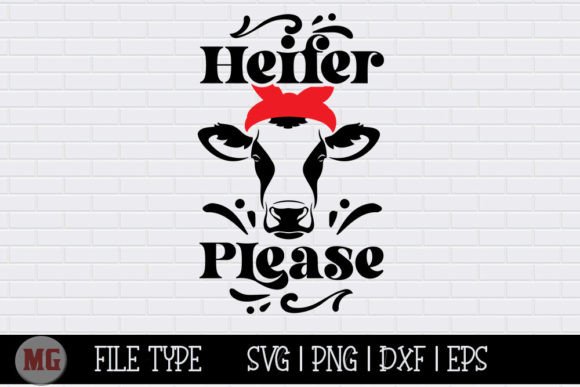
Heifer Please SVG: A Designer's Review for Kitchen Embroidery
When I first pulled up the Heifer Please - Funny Kitchen SVG on my screen, I didn't just see a digital file; I saw a potential bestseller for the upcoming holiday season. As someone who spends hours digitizing and stitching for clients, my first instinct is always to look past the marketing fluff and evaluate how a design actually translates from vector lines to thread on fabric. This particular graphic falls squarely into the realm of modern farmhouse humor, a niche that continues to dominate the Crafts and home decor markets. The phrase itself is punchy, slightly sassy, and immediately establishes a mood that is perfect for kitchen textiles.
First Impressions and Visual Personality
The visual personality of this design is bold and unapologetic. In the world of Graphics, simplicity often wins, especially when the end goal is embroidery. Complex gradients and tiny details get lost under the needle, but a strong typographic statement like "Heifer Please" holds its ground. The layout appears balanced, suggesting that the negative space is handled well, which is crucial for maintaining readability once the stitch density is applied. For an embroidery project, this kind of clear, high-contrast design is a dream because it minimizes the risk of the text becoming a muddy blob after washing.
I imagine this design working exceptionally well as a centerpiece on a linen tea towel or a canvas apron. The humor fits the chaotic energy of a busy kitchen, making it an ideal personalized gift for a hostess, a new homeowner, or a fellow crafter who appreciates a good laugh. It's not just a picture; it's a conversation starter. When evaluating the shape and theme, I'm thinking about how the letters will interact with the fabric texture. A rustic burlap or a waffle-weave cotton would complement the down-to-earth vibe of the phrase perfectly.
Real-World Application: The Tote Bag Test
To truly understand the value of the Heifer Please - Funny Kitchen SVG, let's walk through a real-life scenario. Imagine you are preparing a custom order for a local boutique that specializes in quirky kitchenware. They want a line of heavy-duty canvas tote bags for carrying groceries or farmers' market hauls. This is where the rubber meets the road. You import the SVG into your embroidery software to convert it into a machine embroidery design.
Because the source file is an SVG, you have the flexibility to resize without losing quality, which is a massive advantage over raster images. However, before you hit "start" on the machine, you need to consider the hoop size. If the design is wide, you might need a larger hoop or a re-hooping strategy, especially if you are adding other elements like a cow illustration or decorative borders. For a standard tote bag, placing this design centrally creates a strong focal point. The customer reaction to such a product is usually immediate laughter followed by a purchase; it taps into the emotional connection people have with their kitchen spaces.
If you are an Etsy seller or run a small shop, this design could also be adapted for sweatshirt embroidery. Picture a cozy, oversized crewneck worn while cooking Sunday dinner. The key here is ensuring the thread colors pop against the garment. A classic white or cream thread on a navy or charcoal sweatshirt would make the "Heifer Please" message stand out sharply. Alternatively, using a variegated thread could add a fun, textured look that enhances the handmade feel of the finished product.
Technical Considerations for Stitching
While the design concept is solid, practical execution requires attention to detail. One area where designers often stumble is assuming that an SVG ready for cutting machines is automatically optimized for stitching. This is a digital embroidery file source, not necessarily a pre-digitized stitch file. You will likely need to apply your own stitch types—perhaps a satin stitch for the borders of the letters to give them definition, and a fill stitch for the body to ensure coverage. Be mindful of the stitch density; too dense, and the fabric will pucker; too light, and the backing will show through.
There are specific situations where you need to proceed with caution. If you plan to use this on stretchy fabrics like jersey knits for baby embroidery projects (perhaps a funny onesie for a farm-themed baby shower), stabilization is non-negotiable. A cut-away stabilizer is usually safer than tear-away for items that will undergo frequent washing. Similarly, if you are attempting this on a curved surface like a cap, the layout might need adjustment to prevent distortion. Tiny lettering can also be tricky; if the font in the SVG has very thin strokes, they might not translate well to thread unless you are using a fine needle and high-quality polyester thread.
Another critical factor is the background color. On dark fabrics, you must ensure your design includes an underlay or a backing layer to prevent the fabric color from altering the perceived color of the thread. Testing the design on scrap fabric first is the golden rule. I always recommend stitching a sample on the exact same material you intend to sell. This allows you to check for registration issues, thread breaks, and overall aesthetic appeal before committing to production.
Commercial Viability and Brand Consistency
For creative entrepreneurs and craft business owners, the Heifer Please - Funny Kitchen SVG represents more than just a pretty image; it's a potential revenue stream. Whether you are selling the physical handmade product or using the design to create printable mockups for digital listings, consistency is key. If your brand is known for high-quality, durable goods, your stitching must reflect that. Sloppy edges or loose threads can undermine customer trust, regardless of how funny the slogan is.
This design fits seamlessly into various categories of commercial embroidery. It works for holiday gifts, particularly for Thanksgiving or Christmas when kitchen hosting is at its peak. It also serves well as a custom apparel option for staff uniforms in casual dining spots or food trucks looking to inject some personality into their branding. The versatility of the SVG format, along with the included PNG, EPS, and DXF files mentioned in the product description, means you have assets for both physical production and digital marketing materials.
However, a word of caution regarding licensing: always confirm the terms before selling. Just because a file is "ready" doesn't always mean it includes a commercial license for unlimited sales. Check the specific agreement provided with the zip file. If you are unsure, reach out to the creator. Protecting your business from legal issues is just as important as protecting your stitch count.
Final Verdict for Makers
In conclusion, the Heifer Please - Funny Kitchen SVG is a robust choice for designers looking to add a touch of humor to their portfolio. Its strength lies in its simplicity and relatability. When executed with proper technique—choosing the right stabilizer, optimizing the digitizing settings, and selecting quality materials—it transforms from a simple graphic into a cherished embroidered patch of personality on a customer's favorite item. Whether you are creating a one-off gift or a batch of inventory for your online store, this design offers a solid foundation for creativity. Just remember to respect the technical limits of your machine and fabric, and you'll have a winner on your hands.