Reviewing Number with Hearts 3 Svg for Embroidery
As a designer who spends half my life staring at digitized files and the other half pulling bobbins out of jammed machines, I have learned to look past the glossy preview images. We all know that what looks crisp on a computer screen does not always translate cleanly to fabric. When I first opened the Number with Hearts 3 Svg, my immediate reaction was one of cautious optimism. It is a charming piece of graphic art, clearly aimed at the romance and celebration market, but the real question for us embroidery professionals is always: how does it stitch?
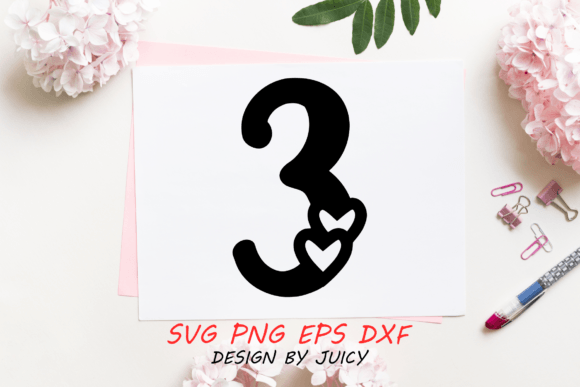
This design falls squarely into the Crafts and Graphics categories, serving as a versatile asset for those of us running small shops or creating personalized gifts. The concept is simple yet effective: the numeral three intertwined with heart motifs. It creates a mood that is soft, affectionate, and celebratory. Visually, it feels right at home in projects related to Valentine’s Day, anniversaries, or third birthdays. But before you load this onto your machine for a client order, let’s break down how this specific design behaves in a real-world embroidery scenario.
The First Impression: Mood and Layout
The layout of the Number with Hearts 3 Svg is balanced, which is crucial for embroidery. Uneven weight distribution can cause puckering, especially on lighter fabrics. The hearts appear to soften the rigid geometry of the number, making it feel more organic. For a designer, this means the visual personality is approachable and warm. It does not scream for attention with aggressive lines; instead, it invites a closer look. This subtlety is perfect for boutique branding or high-end handmade products where understated elegance sells better than loud graphics.
However, because this is originally described as an SVG suitable for paper cutting and wall art, we must assume the lines are clean and vector-based. In embroidery terms, this often translates to a need for careful digitizing if the file is not already optimized for stitching. If you are using this as a base for a machine embroidery design, you need to ensure that the curves of the hearts and the straight edges of the number are converted into appropriate stitch types, such as satin stitch for borders and fill stitch for larger areas, to maintain that crisp vector look.
Real-World Application: A Case Study
Let’s imagine a realistic scenario. You run a small Etsy shop specializing in personalized baby items. A customer orders a set of three bibs for a triplet’s first Valentine’s Day. They want a subtle, cute design that survives frequent washing. You choose the Number with Hearts 3 Svg for its thematic relevance. Here is where practical judgment comes in.
If you apply this design directly to a thin cotton bib without proper stabilization, the density of the hearts might cause the fabric to pucker around the numeral. The stitch density is the invisible variable here. Since the product description mentions suitability for stickers and paper cutting, the original graphic might have solid fills. In embroidery, solid fills on small details can become stiff and uncomfortable against a baby’s skin. My advice would be to use a lighter fill pattern or even convert some of the smaller heart elements into running stitch outlines to keep the textile soft and flexible.
Alternatively, consider this design for a tote bag design. Canvas or heavy cotton tote bags can handle higher stitch densities. Here, the Number with Hearts 3 Svg could shine as a bold statement piece. The contrast between the thread colors and the natural fabric would make the hearts pop, creating a lovely handmade product that feels substantial and well-crafted. For a sweatshirt embroidery project, the texture of the fleece will interact differently with the stitches. You might need to adjust the underlay to prevent the design from sinking into the pile of the fabric.
Technical Considerations and Fabric Choices
Not every fabric is a friend to every design. When working with the Number with Hearts 3 Svg, you must be mindful of the material. On stretchy fabrics like jersey knits used in t-shirts, the tension from the stitching can distort the shape of the number three. The hearts might look squashed if the hoop tension is too tight or if the stabilizer is insufficient. Always use a cut-away stabilizer for stretchy garments to ensure the design retains its shape after washing.
Dark fabrics present another challenge. If you are stitching light-colored threads on a black hoodie, the background fabric showing through the stitches can ruin the clarity of the design. This is where checking your thread colors and potentially adding a backing layer or using a denser stitch pattern becomes necessary. Conversely, on white or pastel fabrics, you have more freedom, but you must ensure that any jump stitches are trimmed cleanly to maintain a professional finish.
Small hoop sizes require scrutiny. If you are trying to fit this onto a small cap or a baby’s hat, the details of the hearts might become lost. Tiny corners and intricate intersections are the enemies of embroidery needles. If the design is too small, the threads will bunch up, creating a blob rather than a distinct heart. In such cases, it is better to scale up the design or simplify it by removing some of the finer decorative elements.
Enhancing Product Value and Brand Consistency
Why does this matter for your business? Because consistency builds trust. When a customer buys a personalized gift from your craft business, they are buying into your aesthetic. The Number with Hearts 3 Svg offers a cohesive look that can be repeated across various products, from embroidered patches to kitchen towels. This repetition helps in brand recognition. If your shop is known for sweet, romantic designs, this asset fits perfectly into your portfolio.
Moreover, the versatility of this design allows for creative marketing. You can create printable mockups showing the design on different items, helping customers visualize the final product. This reduces hesitation and increases conversion rates. Whether it is for holiday embroidery or a year-round custom apparel line, having reliable, attractive design assets like this one streamlines your workflow.
Practical Designer Notes for Best Results
Before you commit to a full production run, follow these steps to ensure quality:
- Test on Scrap Fabric: Always stitch out the design on the same type of fabric you intend to use for the final product. This reveals issues with tension and density.
- Check Thread Contrast: Ensure your thread colors stand out against the fabric. High contrast enhances visibility, while low contrast creates a subtle, tonal effect.
- Review Stitch Density: If the design feels stiff, reduce the density or change fill patterns. Comfort is key for wearable items.
- Confirm Hoop Size: Make sure the design fits comfortably within your hoop with enough margin for stability.
- Inspect Small Details: Zoom in on the digital file. Are the hearts too small to stitch cleanly? If so, simplify or enlarge.
- Use Proper Stabilizer: Match the stabilizer to the fabric. Cut-away for knits, tear-away for wovens, and wash-away for delicate fabrics.
- Verify Licensing: Since this is a digital product, confirm whether the license allows for commercial use if you plan to sell finished items. Never assume; always check the terms provided by the creator.
In conclusion, the Number with Hearts 3 Svg is a promising addition to your library of Graphics for Crafts. It carries a gentle, loving aesthetic that resonates with customers looking for meaningful, personalized items. However, its success depends entirely on your technical execution. By understanding how the design interacts with different fabrics, hoops, and stitch types, you can transform a simple digital file into a high-quality finished product that delights your customers and strengthens your brand. Treat it with the respect it deserves, test it thoroughly, and it will serve your embroidery project needs well.